Fostering Student Voice
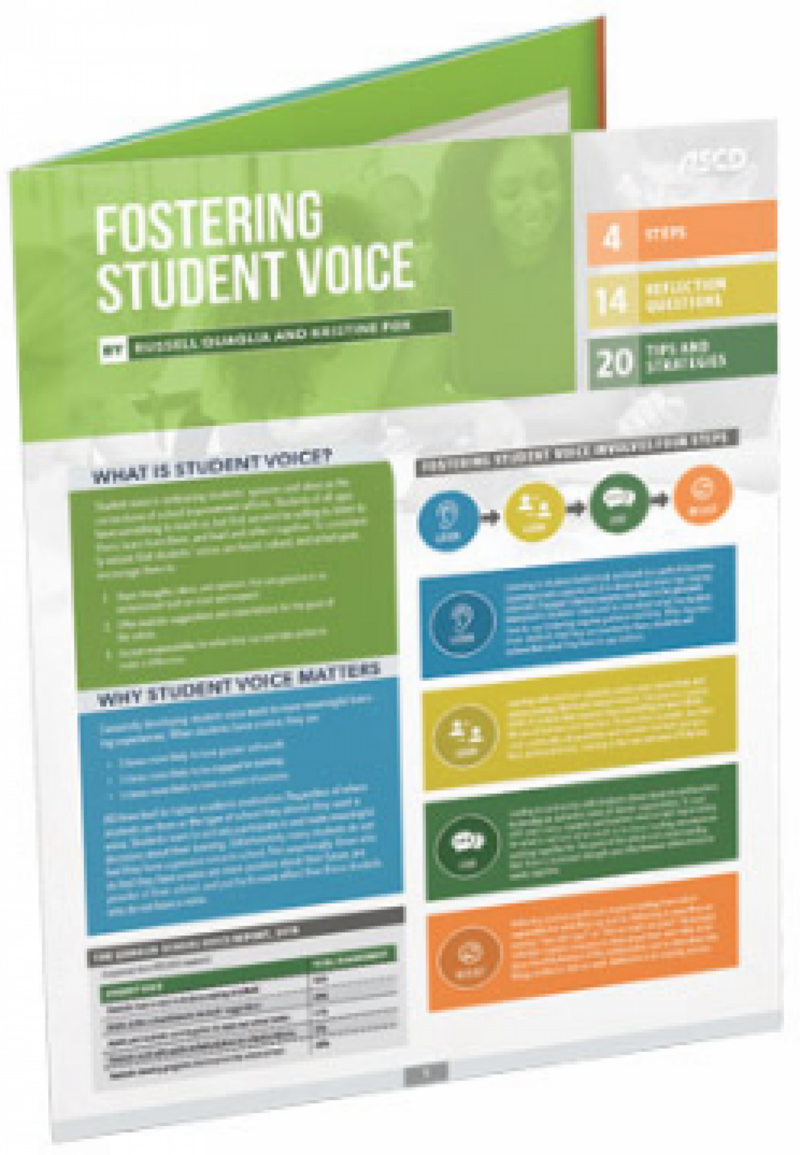
When students have a voice, they are motivated to learn, exhibit greater self-worth, are meaningfully engaged in learning, and have a greater sense of purpose. This handy guide, based on years of research and work in schools, describes a four-step process for fostering student voice. Written by Drs. Quaglia and Fox, this guide will help teachers promote authentic student voice in the classroom and engage students in building identity, agency, and purpose.
Related Posts
Supporting the Ohio Teacher Evaluation System: Aspirations Crosswalk of Ohio Standards for the Teaching Profession and the Teacher Evaluation Rubric Including Next Practices
Gallery